



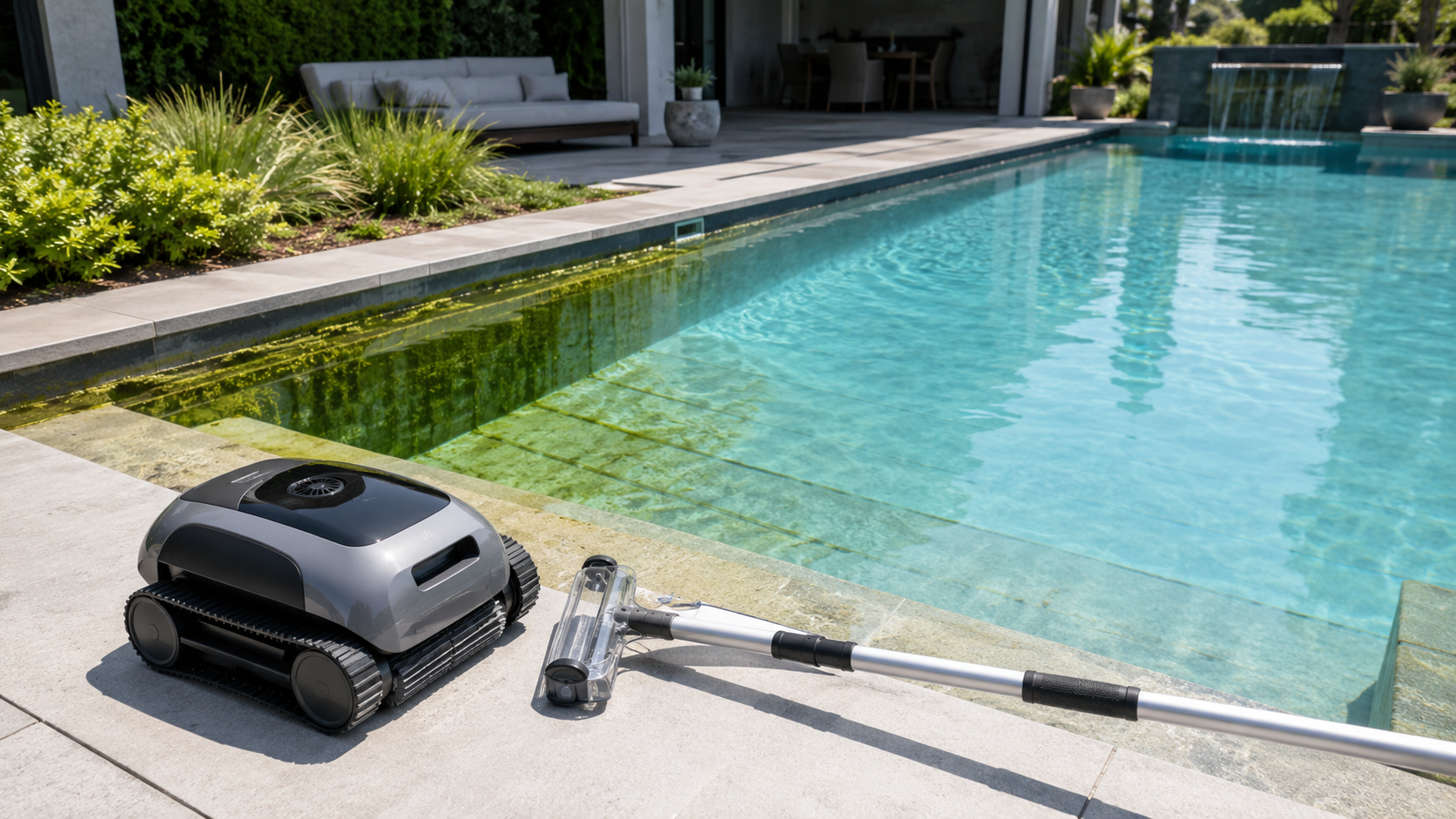
Keeping a swimming pool clear, healthy, and inviting takes more than adding sanitizer and skimming leaves from the surface. Experienced Pool Cleaners know that two of the most important defenses against algae are regular brushing and proper water circulation. These simple maintenance steps help prevent algae from gaining a foothold on walls, steps, corners, and other areas where stagnant water and debris can create ideal growing conditions.
For homeowners, understanding how brushing and circulation work together can make Swimming Pool Care easier, reduce chemical problems, and help avoid the frustration of suddenly finding green or cloudy water.
Why Does Algae Grow in Swimming Pools?
Algae spores can enter a pool through wind, rain, landscaping debris, swimmers, and even pool equipment. Once algae reaches the water, it can begin growing when conditions are favorable.
Common factors that encourage algae include:
- Poor water circulation
- Low sanitizer levels
- Unbalanced water chemistry
- Warm temperatures
- Organic debris
- Dirty filters
- Areas of the pool that are rarely brushed
Even a pool that appears clean can have microscopic algae beginning to develop along the walls or floor. This is why consistent Swimming Pool Servicing should focus on prevention rather than waiting until the water changes color.
Why Pool Brushing Matters
One of the simplest tools used by professional Pool Cleaners is also one of the most important: the pool brush.
Algae often begins by attaching itself to pool surfaces. Walls, steps, ladders, benches, corners, tile lines, and areas around return jets can all collect a thin layer of dirt and organic material. If these surfaces are left undisturbed, algae can become established.
Regular brushing helps loosen this buildup before it becomes a larger problem.
Brushing also exposes algae and other contaminants to the sanitizer circulating through the water. Once debris is loosened from the surface, the circulation and filtration systems have a better opportunity to remove it.
For effective Swimming Pool Care, homeowners should pay extra attention to areas that receive less direct water movement, such as:
- Pool steps
- Corners
- Behind ladders
- Around drains
- Under pool features
- Along the waterline
- Shaded areas
These spots can become algae hiding places even when the rest of the pool looks perfectly clean.
Circulation Keeps Pool Water Moving
Brushing may loosen algae and debris, but circulation helps carry those contaminants toward the filtration system.
Your pool pump pulls water through the skimmers and drains, sends it through the filter, and returns cleaner water back into the pool. When that circulation pattern is working properly, sanitizer and filtered water are distributed throughout the swimming area.
Poor circulation can create “dead spots” where water moves very little. These stagnant areas are especially vulnerable to algae growth.
Professional Swimming Pool Cleaning Services may evaluate circulation by checking return jets, pump performance, filter condition, water levels, and other components that affect water movement.
Sometimes simply adjusting the direction of return jets can help create better circulation throughout the pool.
Your Filter Is Part of the Algae Prevention Team
Circulation and filtration go hand in hand.
When brushing sends dirt, algae, pollen, and other particles into the water, the filter helps capture those contaminants. However, a dirty or overloaded filter may struggle to keep up.
Routine Swimming Pool Servicing should include checking filter pressure and cleaning or servicing the filtration system when necessary.
Depending on the pool, this may involve cleaning cartridge filters, backwashing appropriate filter systems, emptying baskets, or inspecting equipment for reduced water flow.
A clean filter allows the circulation system to operate more efficiently and can help maintain clearer water.
Brushing and Circulation Support Better Water Chemistry
Pool chemicals work best when they are properly distributed throughout the water.
If circulation is weak, sanitizer may not reach every part of the pool evenly. That means the water near a return jet could have adequate sanitizer while a poorly circulated corner develops algae.
Regular brushing helps disturb those problem areas while circulation carries sanitizer throughout the pool.
This is one reason professional Swimming Pool Cleaning Services involve much more than simply making the pool look clean. Effective maintenance combines physical cleaning, circulation, filtration, and balanced chemistry.
Together, these steps create a more stable swimming environment and make algae prevention much easier.
How Often Should You Brush Your Pool?
Many residential pools benefit from brushing at least once per week during regular use. More frequent brushing may be helpful during hot weather, periods of heavy swimming, after storms, or whenever algae is beginning to appear.
Pools surrounded by trees and landscaping may also require additional attention because pollen, leaves, and organic debris can enter the water more frequently.
The right maintenance schedule will depend on your pool’s size, surface, equipment, surroundings, and usage.
Consistent maintenance is the key. Preventing algae is usually much easier than trying to remove a well-established algae bloom.
Professional Pool Cleaners Can Help Keep Algae Under Control
Homeowners can handle many basic maintenance tasks, but professional Pool Cleaners can provide another level of consistency by monitoring the entire pool system. Regular service can help identify circulation problems, filtration issues, chemistry changes, and early algae growth before they turn into more expensive or time-consuming problems.
Professional Swimming Pool Cleaning Services also make it easier for busy homeowners to maintain dependable water quality without spending every weekend testing, brushing, vacuuming, and troubleshooting equipment.
That leaves more time for actually enjoying the pool.
Keep Your Pool Moving, Brushed, and Ready to Enjoy
Good Swimming Pool Care is about creating an environment where algae has fewer opportunities to grow. Regular brushing removes buildup from pool surfaces, while proper circulation distributes sanitizer and moves contaminants toward the filter. Together, these simple habits play an important role in keeping residential pools cleaner, clearer, and easier to maintain.
If you’d rather spend your free time swimming instead of battling algae, Independently Dunn Pool and Spa can help with professional pool cleaning and maintenance throughout Redmond, WA, King County, and Snohomish County. From backyard pools in Bellevue, Kirkland, Woodinville, and Bothell to pools in Everett, Edmonds, Mill Creek, and surrounding communities, homeowners can rely on experienced service to keep their water and equipment in better condition. Contact Us today to request an Estimate and spend more time enjoying your pool instead of maintaining it.
