



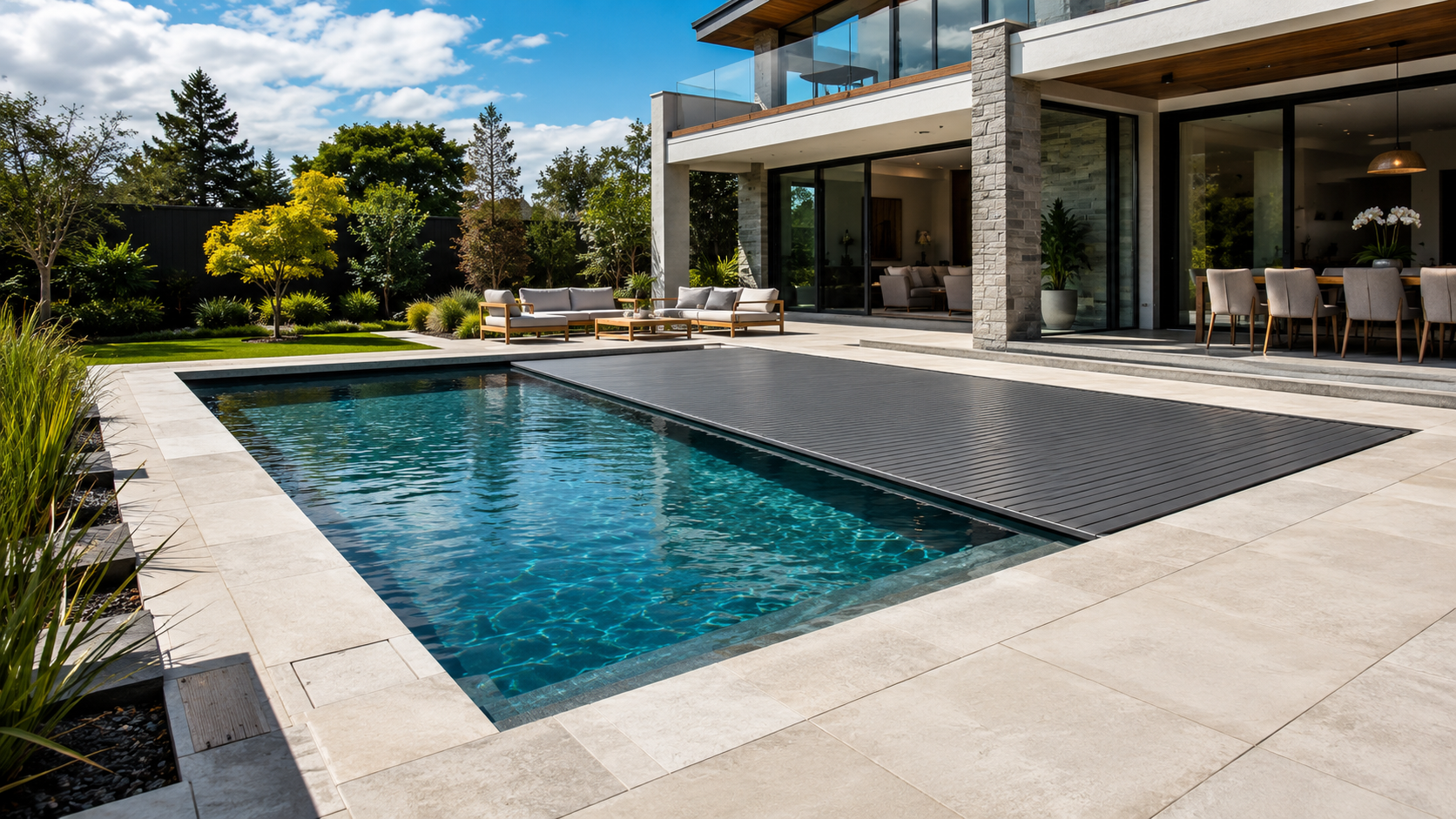
Proper Swimming Pool Maintenance goes beyond keeping the water clean and balanced. If your pool has an automatic cover, that system also needs regular attention to stay clean, operate smoothly, and protect your pool throughout the year. Automatic covers help reduce debris, limit evaporation, retain heat, and add convenience, but exposure to rain, dirt, leaves, pool chemicals, and everyday use can gradually wear on the fabric and mechanical components.
By incorporating automatic cover care into your regular Swimming Pool Servicing routine, you can help extend the life of your cover while catching small issues before they become more expensive repairs.
Why Automatic Pool Covers Need Regular Maintenance
Automatic pool covers work hard every day. When closed, they protect the water from leaves, pollen, branches, dirt, and other debris. During rainy Northwest weather, they may also collect standing water on the surface.
Over time, this buildup can affect the cover fabric, tracks, ropes, rollers, and operating mechanism.
Routine Swimming Pool Maintenance should include checking the condition of the automatic cover along with the pool itself. Regular inspections give homeowners an opportunity to notice fraying, unusual movement, excessive debris, or other signs that the system may need professional attention.
Keep the Pool Cover Surface Clean
One of the easiest ways to protect an automatic pool cover is simply keeping it clean.
Leaves, pine needles, pollen, twigs, and dirt can accumulate on the cover, especially if your backyard has mature trees or landscaping around the pool.
Before opening the cover, gently remove loose debris using a soft broom or another method recommended by the cover manufacturer. Doing this prevents excess debris from falling into the water or being pulled toward the cover housing.
For deeper cleaning, use cleaning products and methods approved for your specific cover material. Avoid harsh chemicals or abrasive tools that could damage the fabric.
Keeping the cover clean also makes your overall Swimming Pool Care routine easier by reducing the amount of organic material entering the water.
Remove Standing Water Promptly
Rainwater can quickly collect on a closed automatic pool cover, particularly during the wetter months in Washington.
Most automatic cover systems are designed to be used with a cover pump that removes accumulated water. Make sure the pump remains clear of leaves and debris so water can drain effectively.
Periodically inspect the pump and power cord for visible wear or damage as well.
Removing standing water helps prevent unnecessary weight from placing stress on the cover and makes it easier to operate once the weather clears.
Keep Tracks and Moving Components Clear
The cover fabric may be the most visible part of the system, but the tracks and moving components are equally important.
Small stones, dirt, leaves, grass clippings, and landscaping debris can collect near the tracks. This buildup may interfere with smooth movement or place unnecessary strain on the system.
Add a quick track inspection to your regular Swimming Pool Servicing schedule. Remove visible debris and keep the areas surrounding the cover mechanism clean.
If the cover begins moving unevenly, hesitates during operation, makes unusual noises, or appears to struggle when opening or closing, avoid repeatedly cycling the system. A professional inspection may help identify the problem before additional damage occurs.
Inspect the Cover Fabric and Webbing
Visual inspections only take a few minutes and can help homeowners catch developing problems early.
Look for:
- Small tears, holes, or cracking in the cover
- Fraying along the cover edges
- Loose or damaged stitching
- Worn or damaged webbing
- Unusual sagging
- Sections that move unevenly
- Excessive water or debris inside the cover housing
Minor wear may sometimes be repairable depending on the cover system and material. More significant damage should be evaluated before continuing regular operation.
Consistent inspections are an important part of preventive Swimming Pool Maintenance, especially for automatic systems containing several moving components.
Maintain Proper Pool Water Levels
Your pool’s water level plays an important role in supporting an automatic cover.
If the water level becomes too low, the cover may lack the support it normally receives from the water underneath it. That can potentially place additional stress on the cover material and system.
Recommended water levels can vary depending on the manufacturer and pool design, so follow the guidelines provided for your particular cover.
Professional Swimming Pool Care can help homeowners maintain proper water levels while also keeping filtration, circulation, and water chemistry operating as intended.
Pay Attention to Water Chemistry
Balanced pool water does more than make swimming comfortable. It also helps protect equipment and surrounding materials.
Extremely unbalanced water chemistry or concentrated chemical vapors may contribute to premature wear on certain automatic pool cover materials.
After adding chemicals, follow the cover manufacturer’s recommendations regarding how long the cover should remain open.
This is another reason routine Swimming Pool Cleaning Services can be valuable. Professional service can help maintain water chemistry while considering how those conditions affect the pool’s equipment, surfaces, and automatic cover.
Do Not Walk or Place Heavy Objects on the Cover
Automatic pool covers are designed to provide important safety benefits, but homeowners should never treat them like a patio or solid surface.
Avoid walking on the cover or placing furniture, planters, equipment, toys, or other heavy objects on top of it.
Even if the cover appears strong enough to support weight, unnecessary pressure can stretch materials or damage components.
Keep children and pets supervised around pools at all times and follow the safety recommendations provided by your pool cover manufacturer.
Schedule Routine Professional Inspections
Homeowners can easily handle tasks such as removing leaves, monitoring standing water, and visually inspecting the cover. However, automatic cover systems can also include motors, ropes, rollers, pulleys, tracks, electrical components, and other mechanical parts.
These components may eventually require adjustment, repair, or professional servicing.
Including the cover as part of your regular Swimming Pool Cleaning Services gives your pool professional an opportunity to notice potential problems while also evaluating circulation, filtration, water quality, and other equipment.
Preventive inspections are typically much easier than dealing with a cover that suddenly refuses to open on the first sunny weekend of the season.
Protect Your Pool and Automatic Cover Year-Round
A well-maintained automatic cover can make owning a pool easier while helping protect the water and reduce everyday maintenance. Cleaning debris, removing standing water, checking tracks, monitoring water chemistry, and scheduling routine inspections are all simple ways to incorporate automatic cover care into your overall Swimming Pool Maintenance plan.
Independently Dunn Pool and Spa provides professional Swimming Pool Servicing, Swimming Pool Care, and Swimming Pool Cleaning Services for homeowners throughout Redmond, WA, King County, and Snohomish County. From Bellevue, Kirkland, and Woodinville to Bothell, Everett, Edmonds, Mill Creek, Mukilteo, and surrounding communities, our team can help keep your pool and equipment ready to enjoy. Contact Us today to request an Estimate.

